Patta Not Auto-Changed After Registration? Check This
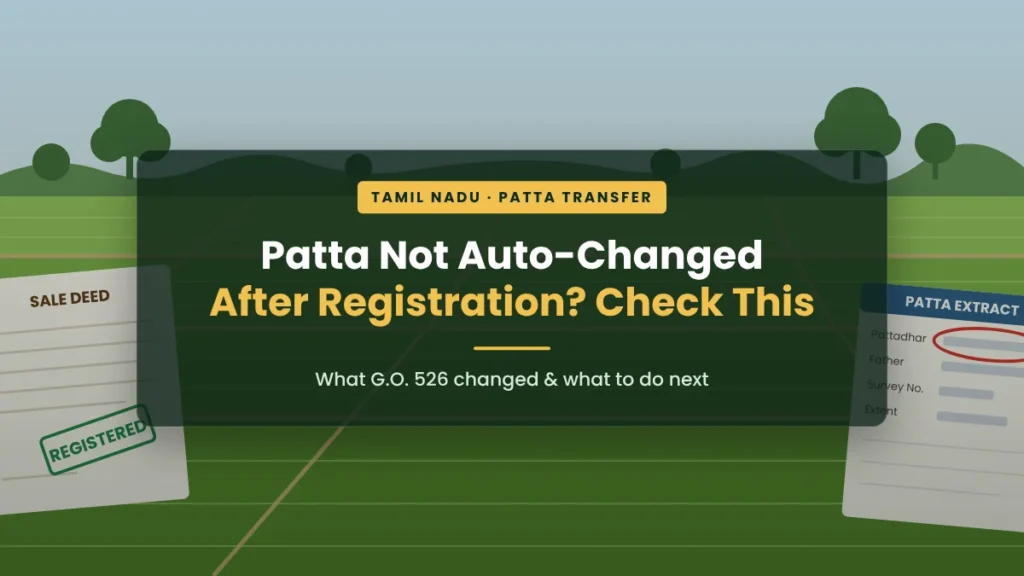
In Tamil Nadu, the patta is supposed to move to the buyer’s name online soon after a sale deed is registered, with no visit to the taluk office. This is called automatic patta transfer, or auto-mutation. Many buyers still find the seller’s name on the patta weeks later.
On 25 June 2026 the Revenue and Disaster Management Department issued G.O. (Ms) No. 526 to fix gaps in the system. Revenue Minister K.A. Sengottaiyan announced it on 3 July and said the software changes would take effect within 15 days. Here is what changed, why your transfer may still have stalled, and what to do.
What G.O. 526 changed
Auto-mutation has run under G.O. (Ms) No. 84 of 4 February 2020. A review meeting chaired by the minister on 12 June 2026 found cases the software could not handle. The new order fixes three of them:
| Situation at registration | Before G.O. 526 | After G.O. 526 |
|---|---|---|
| Seller’s spouse, son or daughter also signs the deed | Did not go through automatically | Eligible for auto-mutation |
| Land sold through a Power of Attorney, so the seller’s name differs from the pattadhar’s | Did not go through automatically | Eligible, if the Power of Attorney is valid |
| Buyer’s new patta number | Added to processing time | Buyer gets the next patta number in the revenue village, whether or not they already own land there |
The basic conditions did not change. Auto-mutation covers only land that does not need subdivision. The seller’s name, survey number and extent must match the online patta, and the property must have no encumbrance.
Why your patta may still show the seller
One of these is usually behind a stalled transfer.
- A detail does not match. One letter different in the seller’s name, a wrong subdivision number or an extent that differs from the online patta stops the automatic route.
- The land needs subdivision. If you bought part of a survey number, the field has to be measured and split first. That goes to the taluk surveyor, not auto-mutation.
- An encumbrance is recorded. A mortgage or attachment on the property blocks the automatic transfer.
- The software rejected the entry. Dinamalar reported on 10 June 2026 that applications with errors were rejected automatically.
- The taluk held it back. The same report said auto-mutation had stalled in some taluks in Chennai, Madurai and Tiruchi. Applicants alleged that staff called them in and demanded ₹2,000 to ₹5,000. A revenue official said action would be taken against anyone interfering.
What to do next
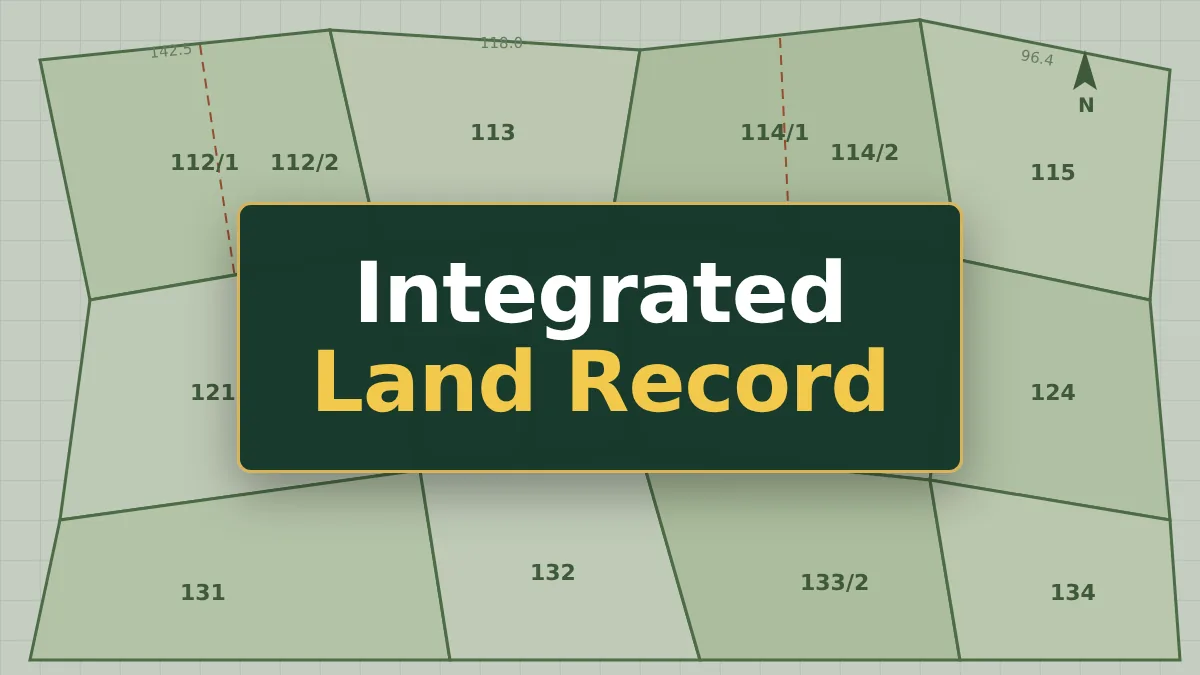
- Check the live patta. On eservices.tn.gov.in, open View Patta & FMB / Chitta / TSLR Extract and search by your survey number. If your name shows, download the extract and keep it.
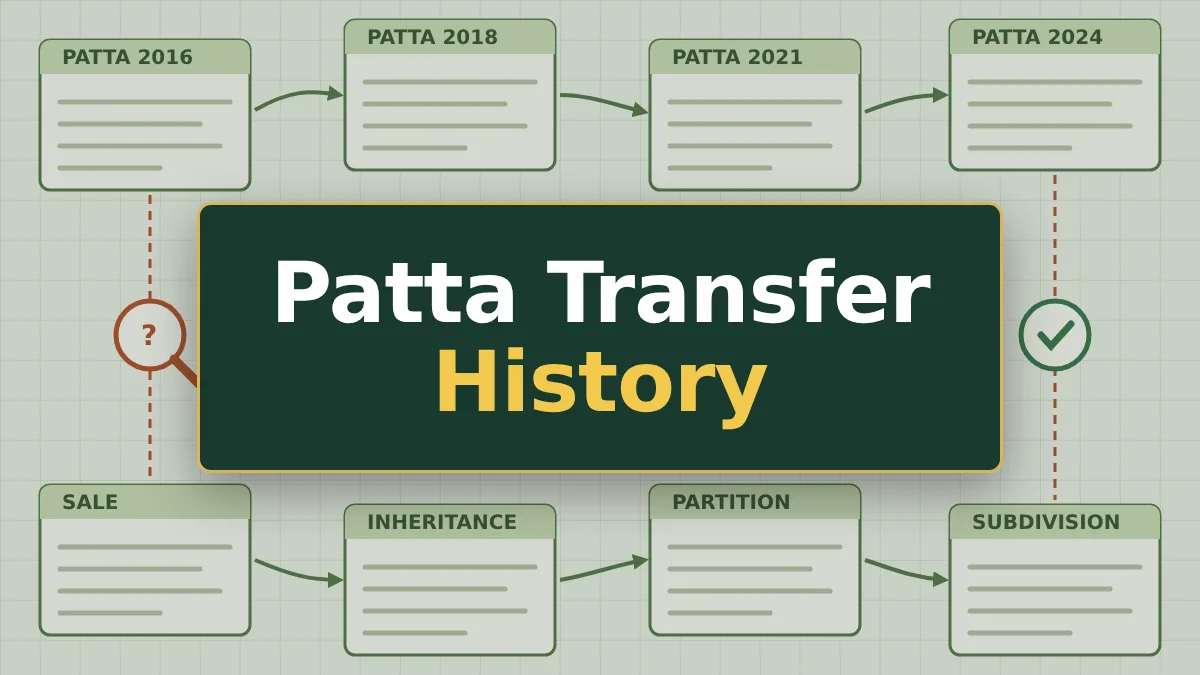
- See whether anything was recorded. Pull the patta transfer history for the survey number. It shows whether any change was entered after your registration date.
- Find the mismatch. Put the seller’s old patta next to your deed. Compare the name, father’s name, survey and subdivision number, and extent.
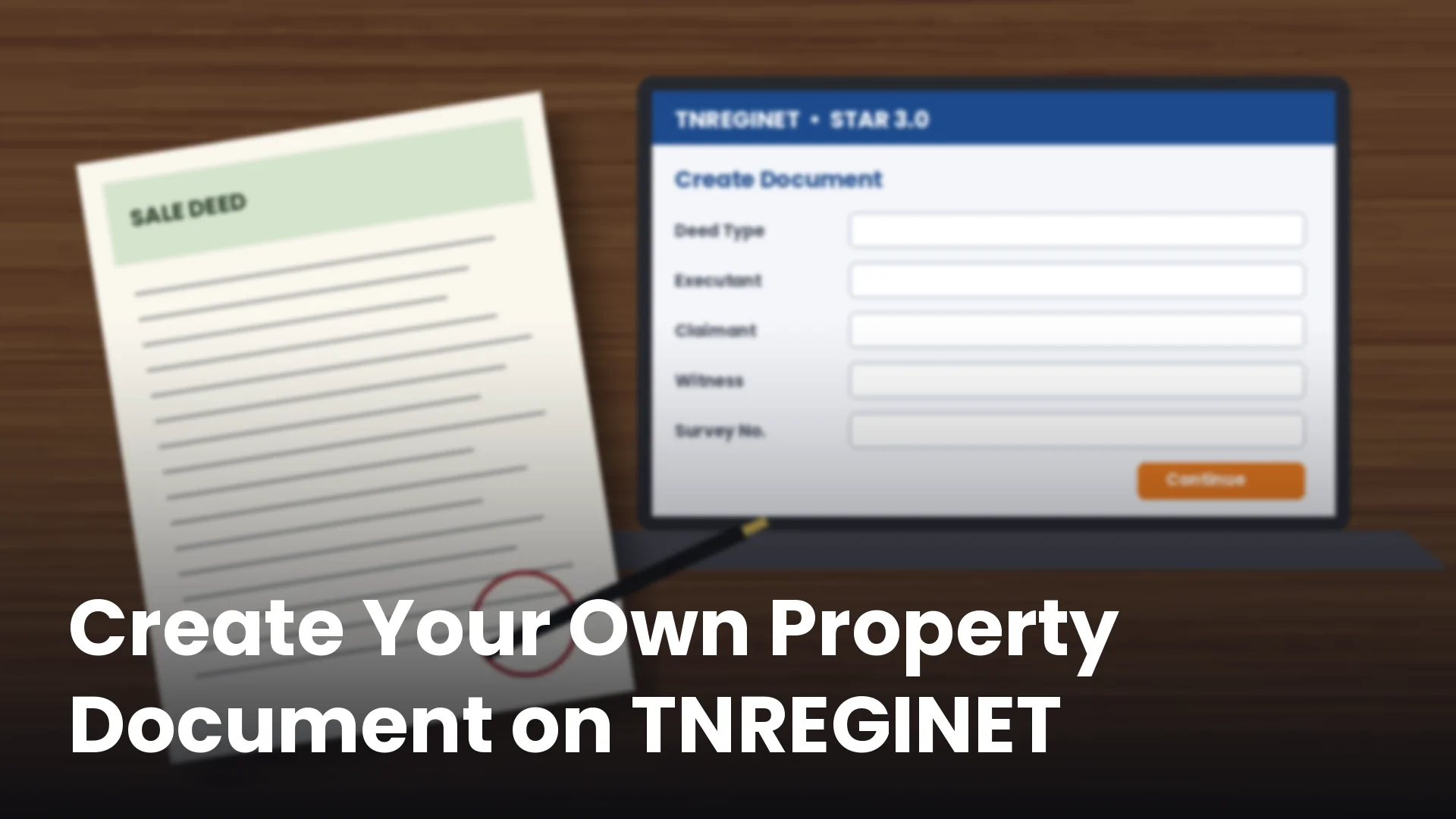
- Apply for transfer yourself. If auto-mutation did not happen, apply on the Tamil Nilam citizen portal, tamilnilam.tn.gov.in/citizen, or at an e-Sevai centre. Upload the registered deed, parent deed, encumbrance certificate and ID proof, and save the application number.
- Track it and escalate in writing. Follow the application status on the same portal. If anyone asks for money to clear it, send a written complaint to the Tahsildar, and to the Revenue Divisional Officer if nothing moves.
FAQs
- Does auto-mutation work for part of a survey number? No. G.O. 526 covers only property that needs no subdivision. A part-field purchase needs a separate subdivision and transfer application.
- My deed was signed through a Power of Attorney. Am I covered? Yes, under G.O. 526, as long as the Power of Attorney is valid and the other details match the online patta.
- Do I have to visit the taluk office? Not when auto-mutation works. If it fails, you can still apply online through the Tamil Nilam citizen portal.